An Equity Platform section has been included in all Metro Board Reports since 2021. Metro staff use Metro equity assessments and relevant data to develop this section. Below, explore a selection of sample Equity Platform Board Report sections, with notes describing what the example highlights and a link to the full Board Report.
For more information about the Board Report Equity Platform Section, visit Equity Information Hub – Assessment Tools, here.
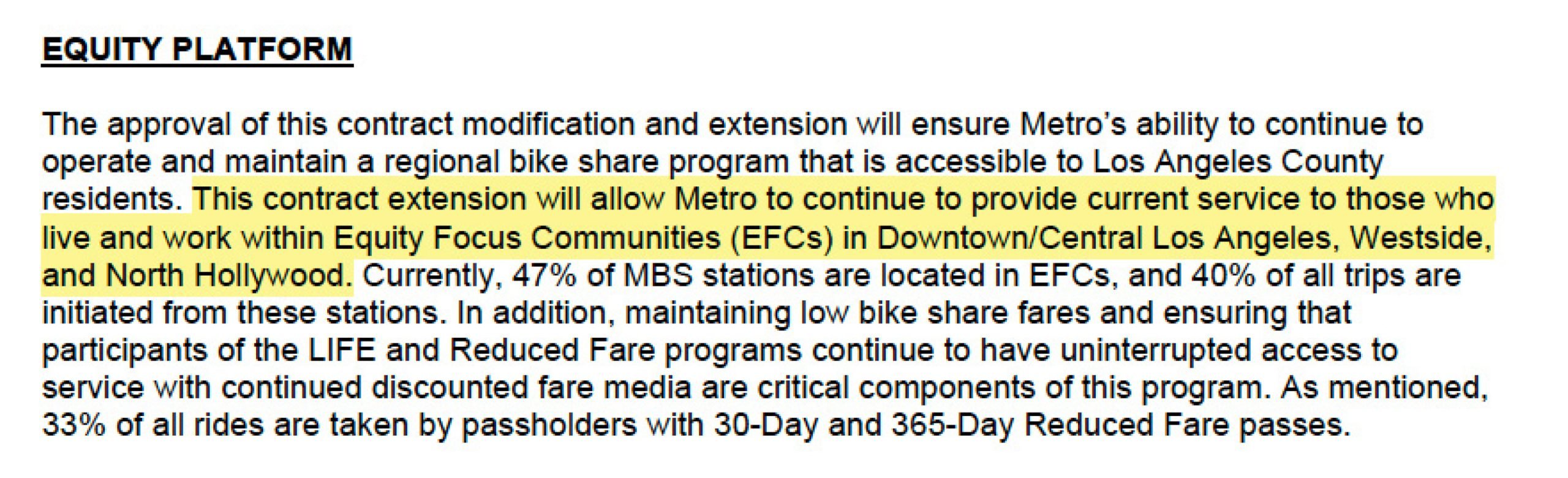
The highlighted example below identifies specific geographic areas andEquity Focus Communities (EFCs) that may be affected by the proposed action. It also includes data showing how people in these communities use the service.
The example could be stronger by identifying specific groups who may be most affected or benefit most, such as low-income riders, people with disabilities, transit-dependent riders or reduced fare program participants.
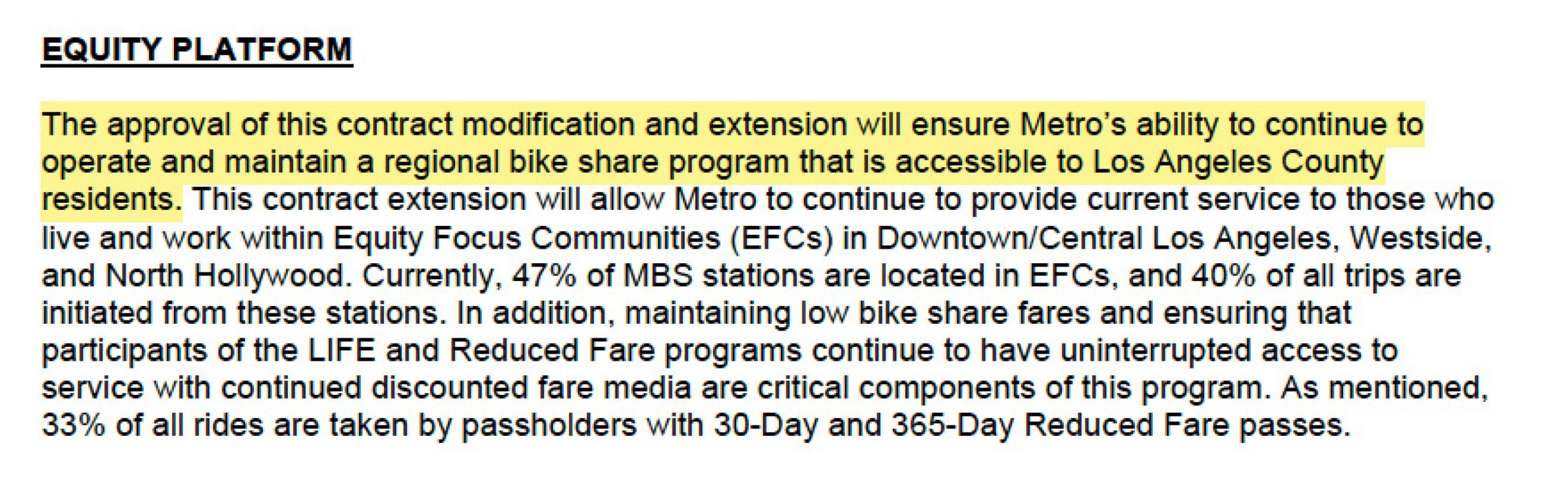
The highlighted example below clearly explains the main benefit of the proposed action by describing how the contract extension would maintain access to affordable regional bike share services. It also connects the action to Equity Focus Communities (EFCs) and reduced fare programs, showing how the service supports riders who rely on affordable transportation options.
The highlighted example below identifies a potential negative impact of the proposed action by explaining how increased rail service may create more train and horn noise for nearby residents.
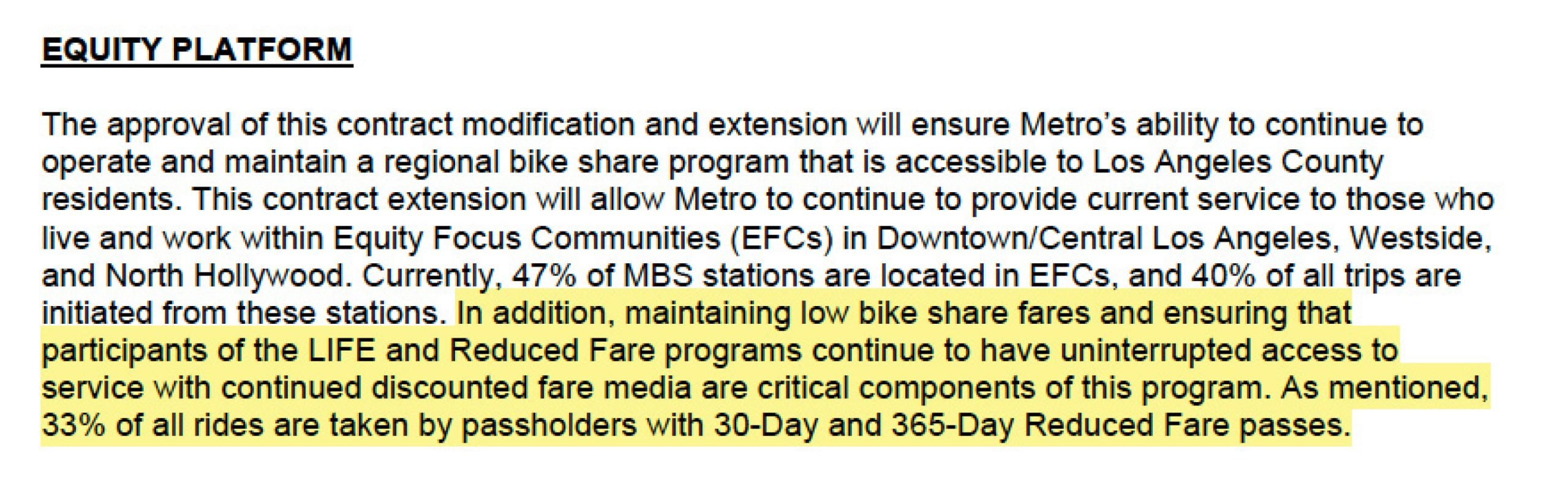
The highlighted example below emphasizes how the proposed action involves targeted equity improvements for low-income riders, including participants of Metro’s LIFE and Reduced Fair programs.
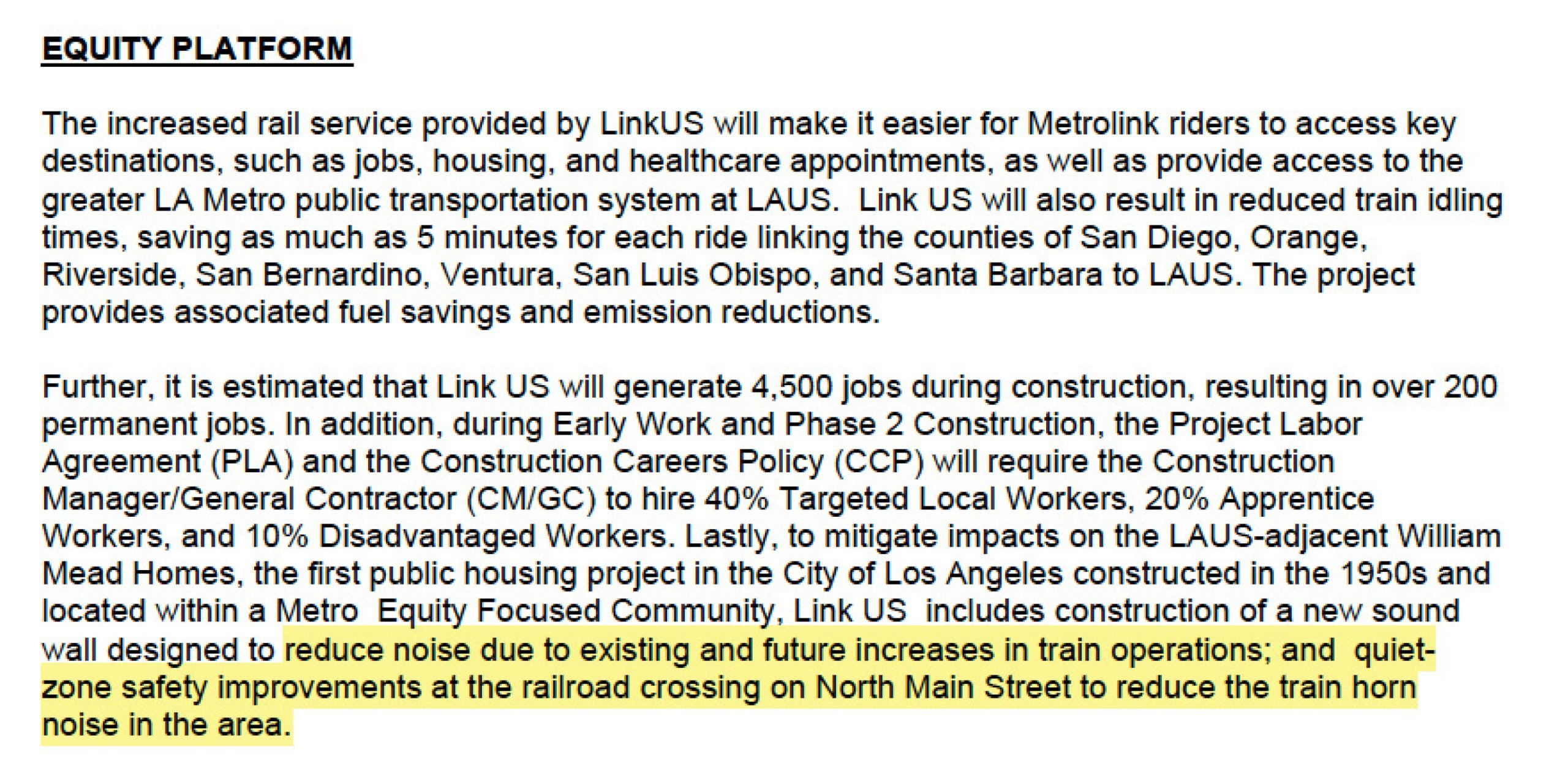
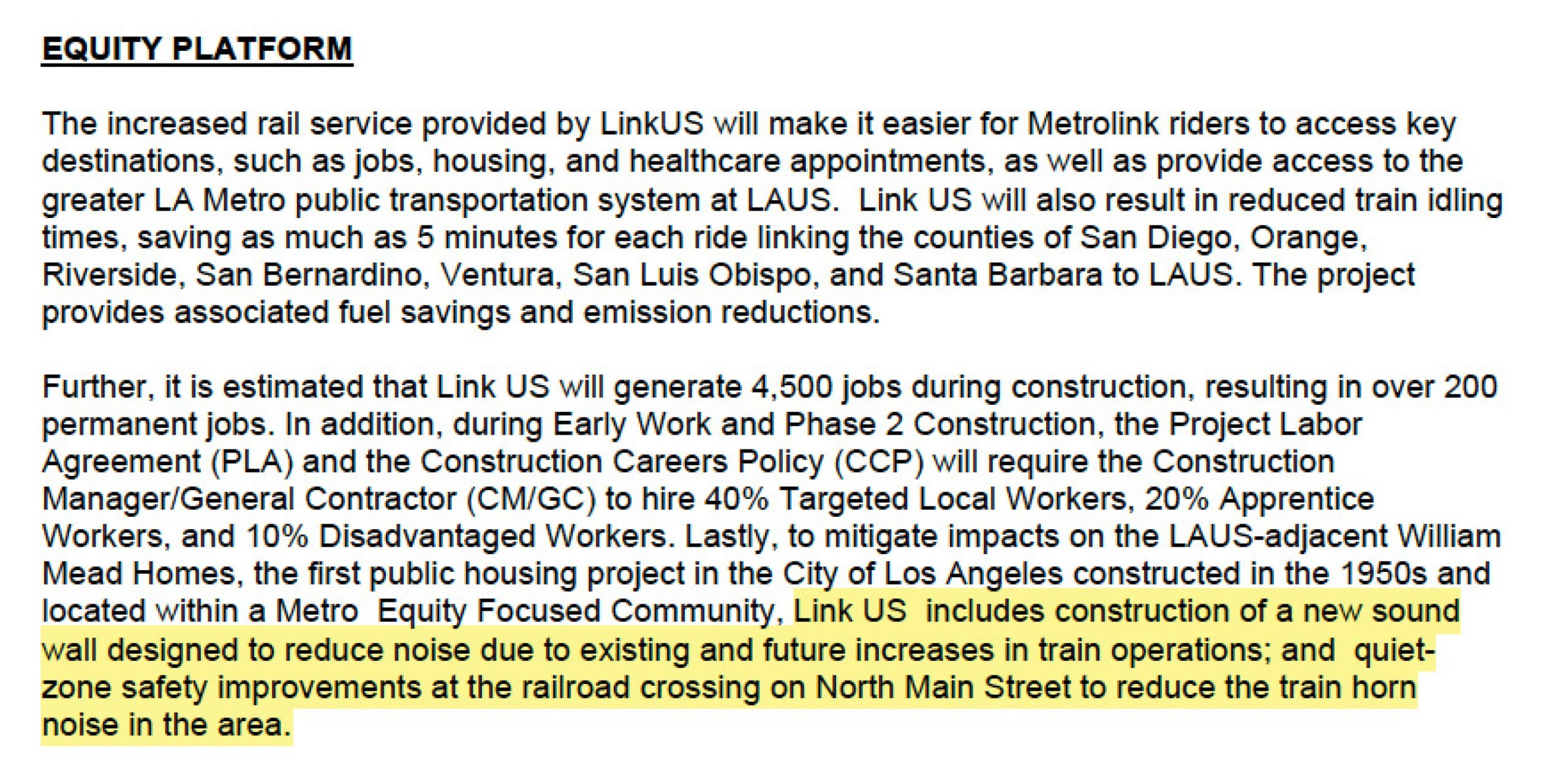
The highlighted example below identifies a potential negative impact of the proposed action and describes specific steps to reduce these impacts, including a sound wall and quiet-zone safety improvements.
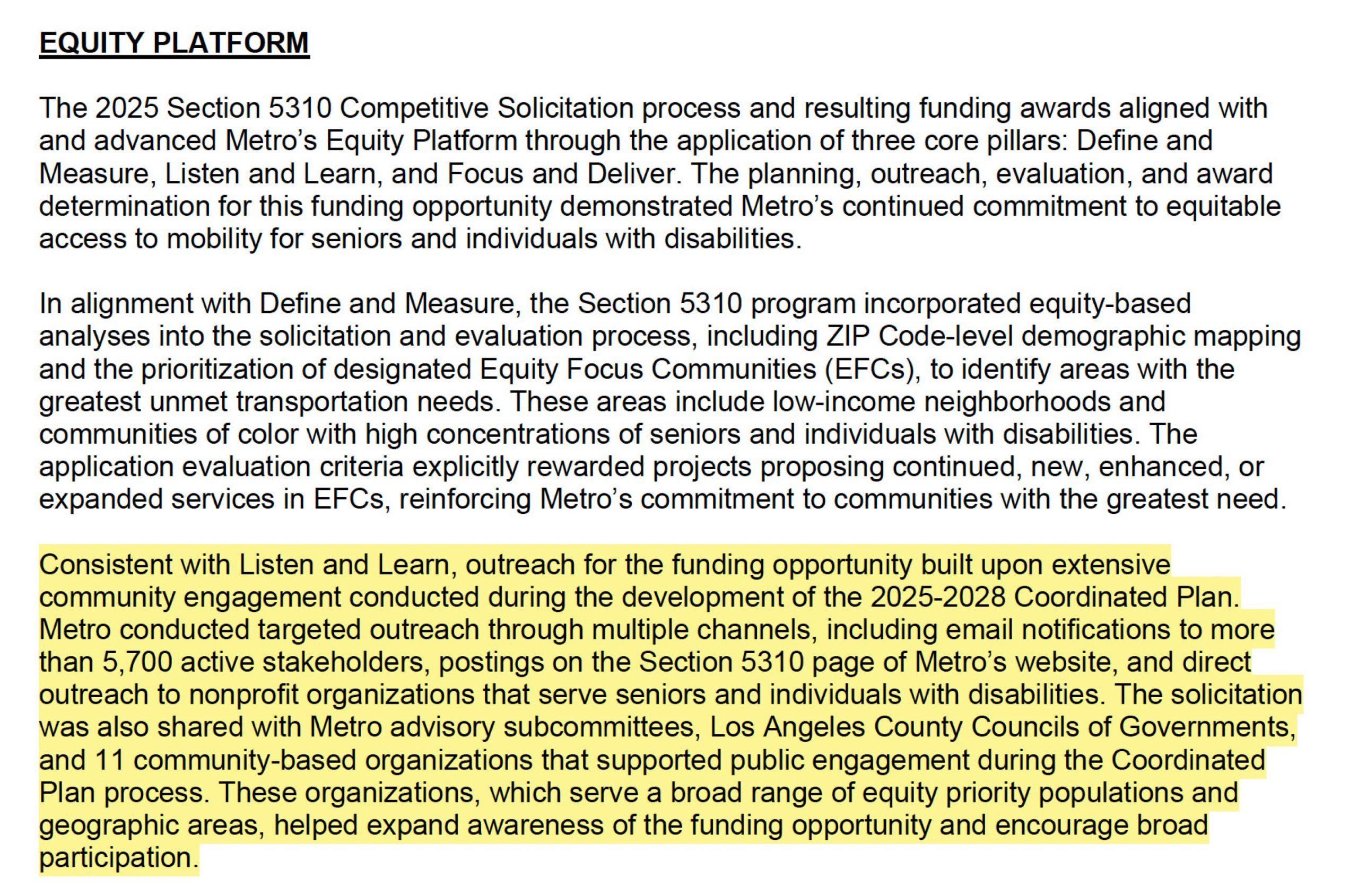
The highlighted example below emphasizes the targeted outreach efforts to engage seniors, people with disabilities, community-based organizations and other stakeholders to help inform the funding process and expand awareness of the opportunity.
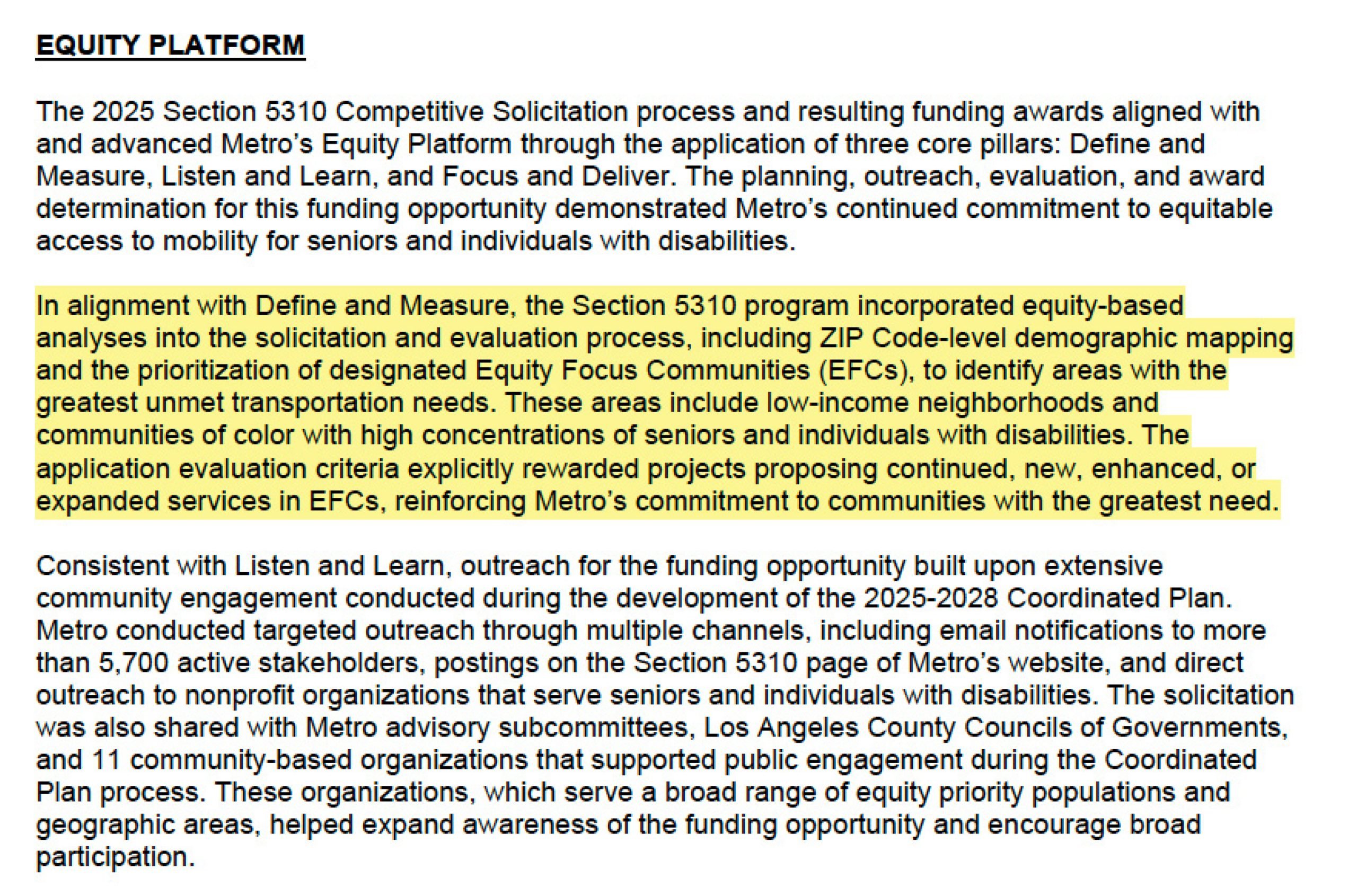
This highlighted example below explains how staff used data and community engagement to help guide the proposed action. It describes how demographic data and Equity Focus Community (EFC) mapping were used to identify communities with greater transportation needs.
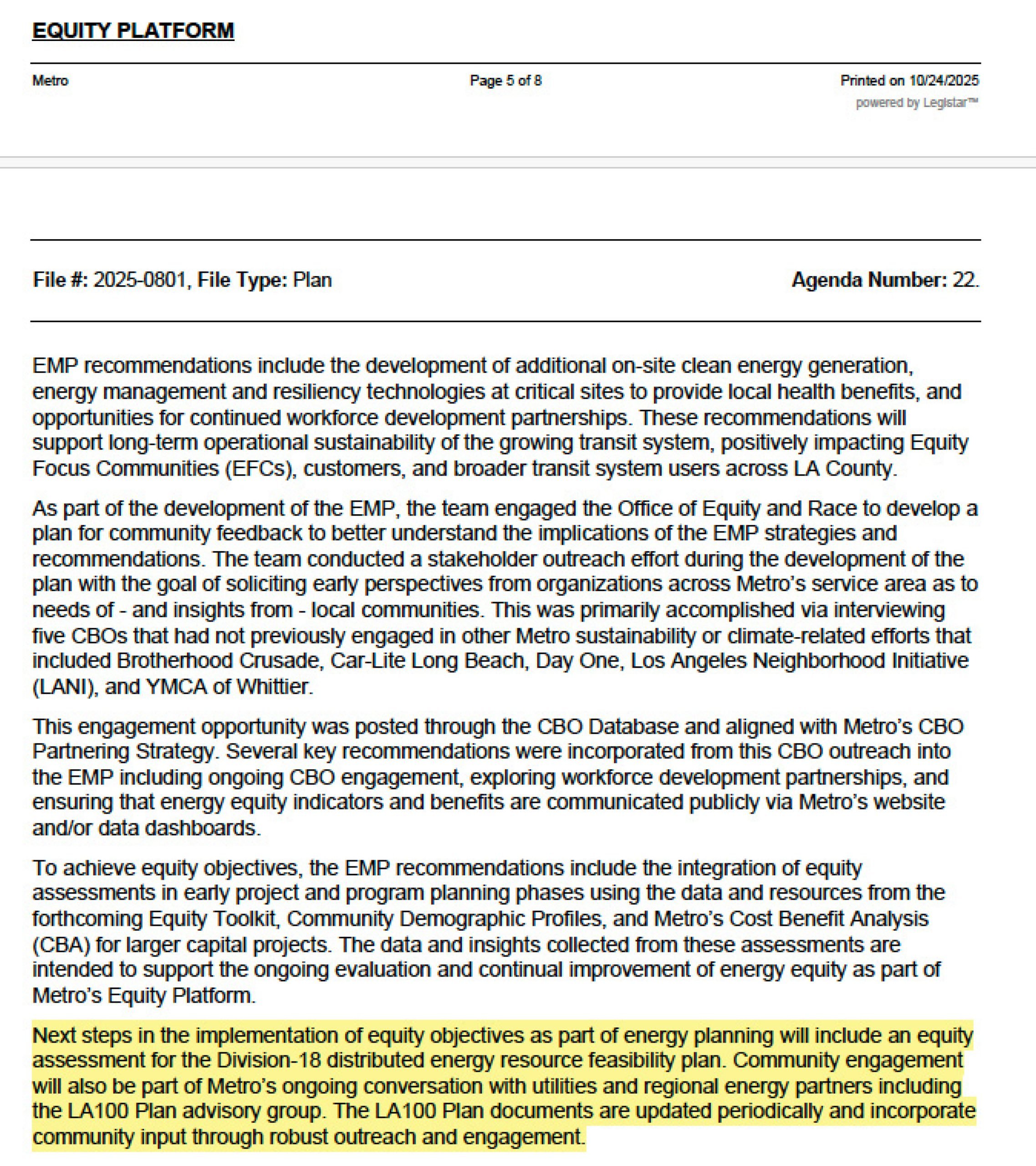
The highlighted example below explains how community feedback will continue to shape future planning efforts. It describes how Metro engaged community-based organizations, stakeholders and partner agencies to gather input and support ongoing collaboration.
The example is strong because it identifies specific next steps for continued engagement, data collection and evaluation to help ensure equitable outcomes over time.
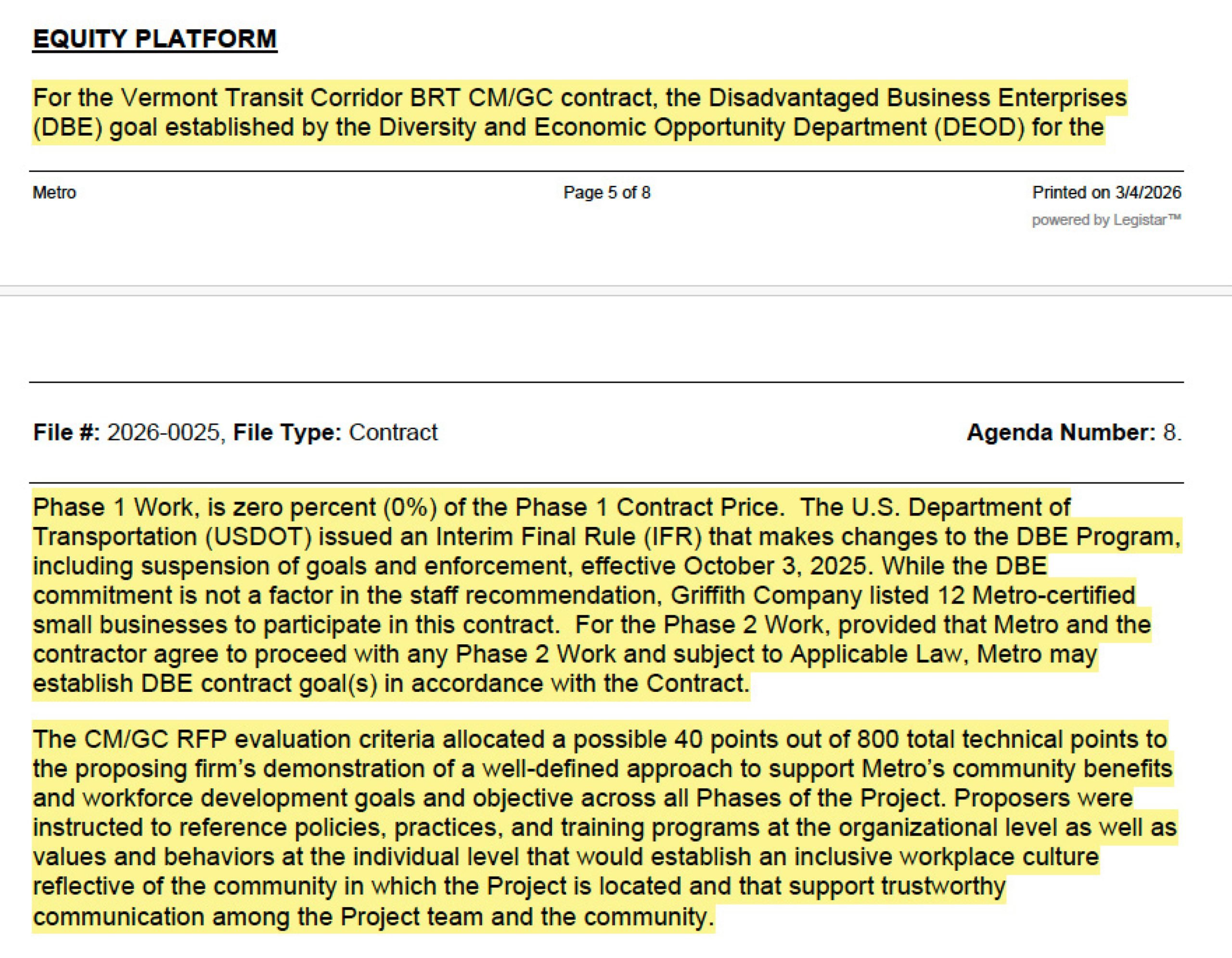
While the highlighted example below does not follow DEOD’s specified format for summarizing the SBE/DBE set-aside requirements, (for more information see Board Report Template in Legistar), it does explain how equity considerations were incorporated into the contract evaluation process, including criteria related to workforce diversity, inclusive workplace practices and community representation.