
Our Role Today
Los Angeles County is a thriving, diverse and innovative region. Metro plays a vital role in making social and environmental justice part of the region’s transportation system. Our mission today has been shaped and defined by LA County’s broader history.
Understanding LA and its communities’ needs is essential to developing policies and allocating resources in a way that improves equity outcomes for all Angelenos, facilitating resilient neighborhoods, inclusive economies and healthy communities. Metro’s Equity Platform is our foundational commitment for incorporating equity assessments into our planning and decision-making processes. Organizational, local, state and federal policies govern how we plan, design, build and operate our mobility systems and enabling infrastructure.
Our Reach
Metro’s breadth is unique among United States transportation agencies. We serve as the major regional public transit supplier, transportation planner and coordinator, designer, builder and operator for Los Angeles County. Metro is also the primary manager for numerous countywide transportation infrastructure and planning programs across the region’s bus, rail and highway systems. We achieve these wide-ranging services through strong collaborations with local jurisdictions, partner agencies and the communities we serve.
More than 10 million people – nearly 1 in 4 California residents – live, work and play within our 1,433-square-mile service area. As of 2023 we operate:
spanning 109 miles across 88 cities and unincorporated areas.
Access is at the root of our mission. Metro strives to provide accessible service to all our customers and recognizes the wide range of people and communities we serve.
Our Ridership
LA County is large and diverse. Our residents have varied travel needs, and our rail and bus services help riders achieve them safely and efficiently.
We serve communities that reflect the county’s wide-ranging demographics, particularly those with fewer transportation options. Metro’s riders perform key roles in the region’s industries and provide skills and services that support residents and LA’s economy. As of 2024, Metro bus and rail services were used most by Hispanic and Latino riders, and a high proportion of Metro riders currently qualify as low-income.
Metro’s Ridership by the Numbers as of Fall 2024
72%
of bus riders and
54%
of rail riders
reported an annual household income of under $25,000
76%
of bus riders and
77%
of rail riders
use the system at least three days a week
64%
of bus riders and
67%
of rail riders
have been using the system for more than three years
87%
of bus riders and
78%
of rail riders
do not have regular access to a car
91%
of bus riders and
88%
of rail riders
are BIPOC (Black, Indigenous and/or People of Color)
During Calendar Year 2024 the estimated annual ridership for Metro’s system was
For more information on Metro’s ridership, visit: metro.net/about/metro-research.
Broadening Our Reach
Metro manages a substantial portion of countywide transportation funds. This includes overseeing planning and funding for the regional public transit system, multimodal highway corridors and complete streets projects, cycling and pedestrian infrastructure improvements and accompanying education campaigns.
While driving remains the most popular mode of transportation across the county, LA’s active transportation infrastructure continues to improve. Metro is committed to continually supporting active transportation infrastructure and accessibility. We achieve these improvements by collaborating on shared goals with other transportation agencies and local jurisdictions in LA County. Through long-term investments in active transportation, we aim to reshape movement and life across LA and establish the foundation for a more equitable, sustainable region.
Our Responsibility
Metro serves LA County by providing access to dependable, safe, affordable and sustainable multimodal transportation. For many folks across LA County, Metro’s services are a primary transportation source.
Metro serves transit riders, for whom robust, high-frequency service is essential for accessing health, economic and social resources. Metro operates high-frequency bus stops that reach two-thirds of LA County residents. High-frequency bus service is essential for low-income communities most burdened by high costs of other transit options, like personal vehicles.
Metro serves drivers. Metro advances planning, design and construction of capital freeway projects including carpool lanes, ramp improvements and congestion management—improving travel times for drivers across LA County.
Metro serves pedestrians and cyclists who share streets with cars and transit. Metro’s complete streets initiative provides safer roadway facilities for pedestrians and bicyclists, improving road infrastructure and creating a more sustainable transportation system.
For more information on Metro’s broad range of responsibilities, see the Measure M Five-Year Comprehensive Assessment and Equity Report.
Measure M
Metro’s local funding is established through several sales tax ballot initiatives, including Propositions A and C as well as Measures R and M. While Proposition A, Proposition C and Measure R establish foundations for improving mobility across LA County, Measure M represents a key milestone for equity considerations in Los Angeles transportation planning.
Measure M was passed in 2016. It partially funds local transit projects, programs and services, and it laid the groundwork for Metro’s current equity approach. Measure M catalyzed advocates, including community-based organizations (CBOs), academics, policy professionals and other stakeholders to encourage Metro to establish shared equity definitions and goals, and identify communities experiencing inequity in Los Angeles.
These efforts and principles are incorporated into the many Metro projects and programs that Measure M funds, like Metro’s Equity Platform, the Metro Active Transportation, Transit and First/Last Mile (MAT) Program and Metro’s Active Transportation Strategic Plan (ASTP).
For more information about Measure M and its reach, visit metro.net/about/measure-m.
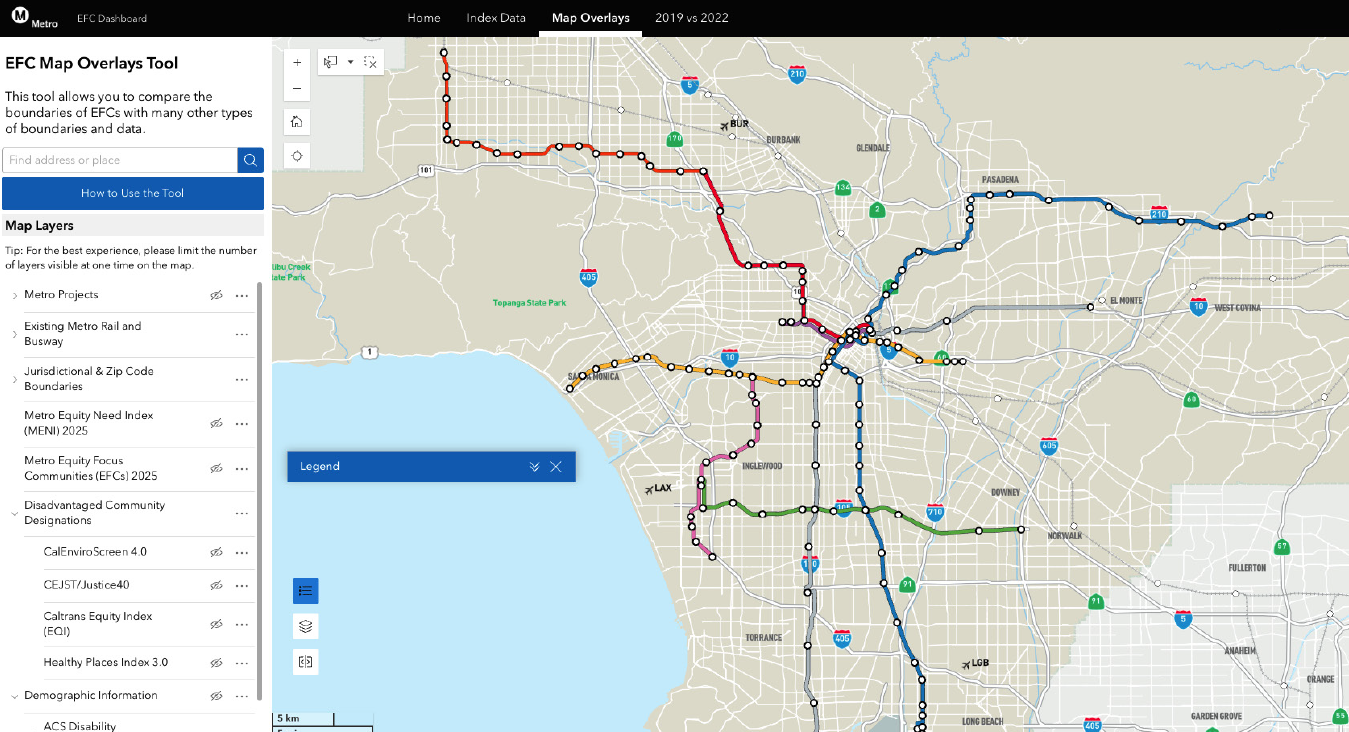
Metro is consistently working to improve transportation service delivery to increase and enhance access to opportunity for all Angelenos. For more information about Metro’s commitment to opportunity access, visit metro.net/category/access-toopportunity.
To learn more about Metro projects that have integrated equity into their planning and programming processes, visit Learn From Project Examples.
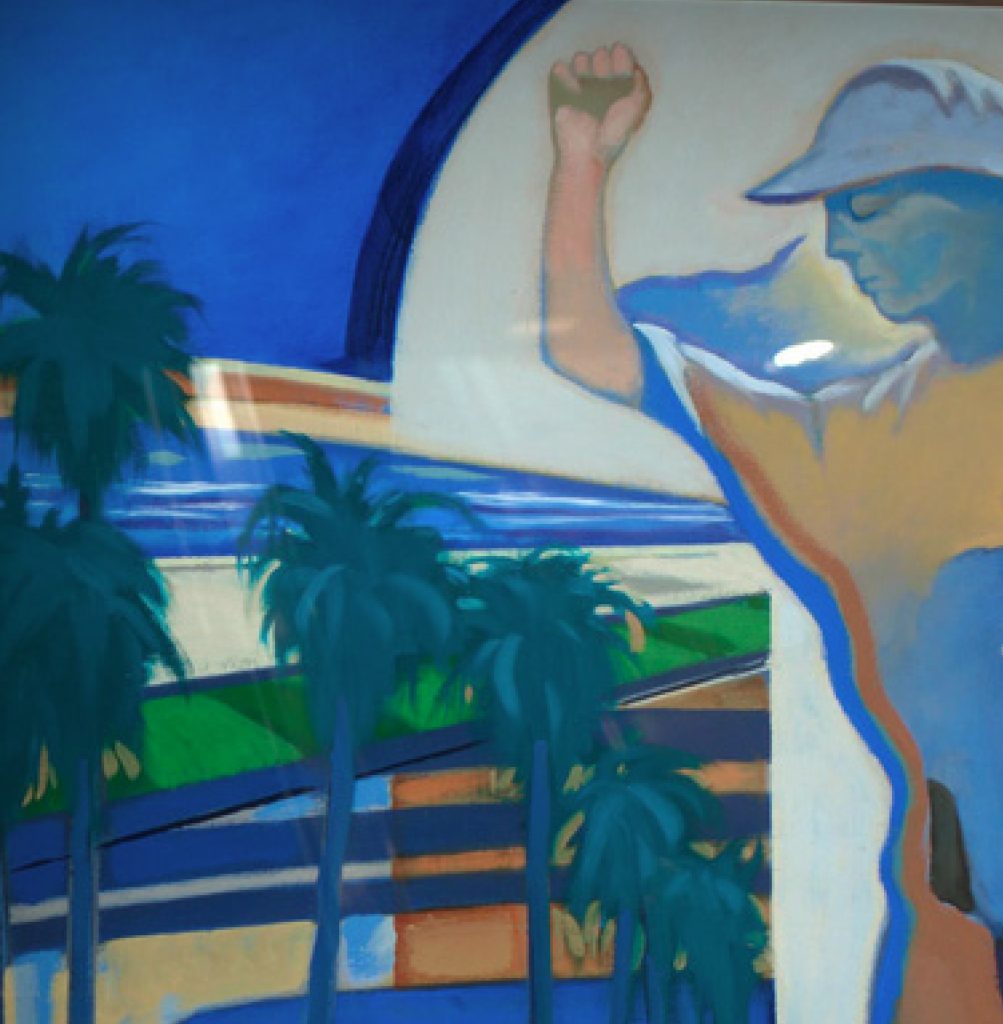
Image: Close-up of art installation Performance on the Streets of LA, by Ralph Gilbert, at the Historic Broadway station.
The Metro itself is actually quite nice. I meet with a group of other cyclists near Santa Monica, and it’s easier to take the Metro instead of sticking my bike in my car every time.
— Frequent Active Transportation User and Cyclist
I really like how Metro is expanding their lines and how they made more room in the cars to fit my scooter.
— E Line Rider
Transportation directly affects community health, not just mobility.
— Student Metro Rider
I am always taking the bus from Sunset/Vermont to UCLA, so I’m very thankful that the bus exists and that there’s one direct way for me to get to and from campus.
— Bus Line 2 Rider
The bus is a really nice place for me to just unwind.
— Teen Metro Rider